
 Chinese
  English
  Turkish
  Arabic
  Russian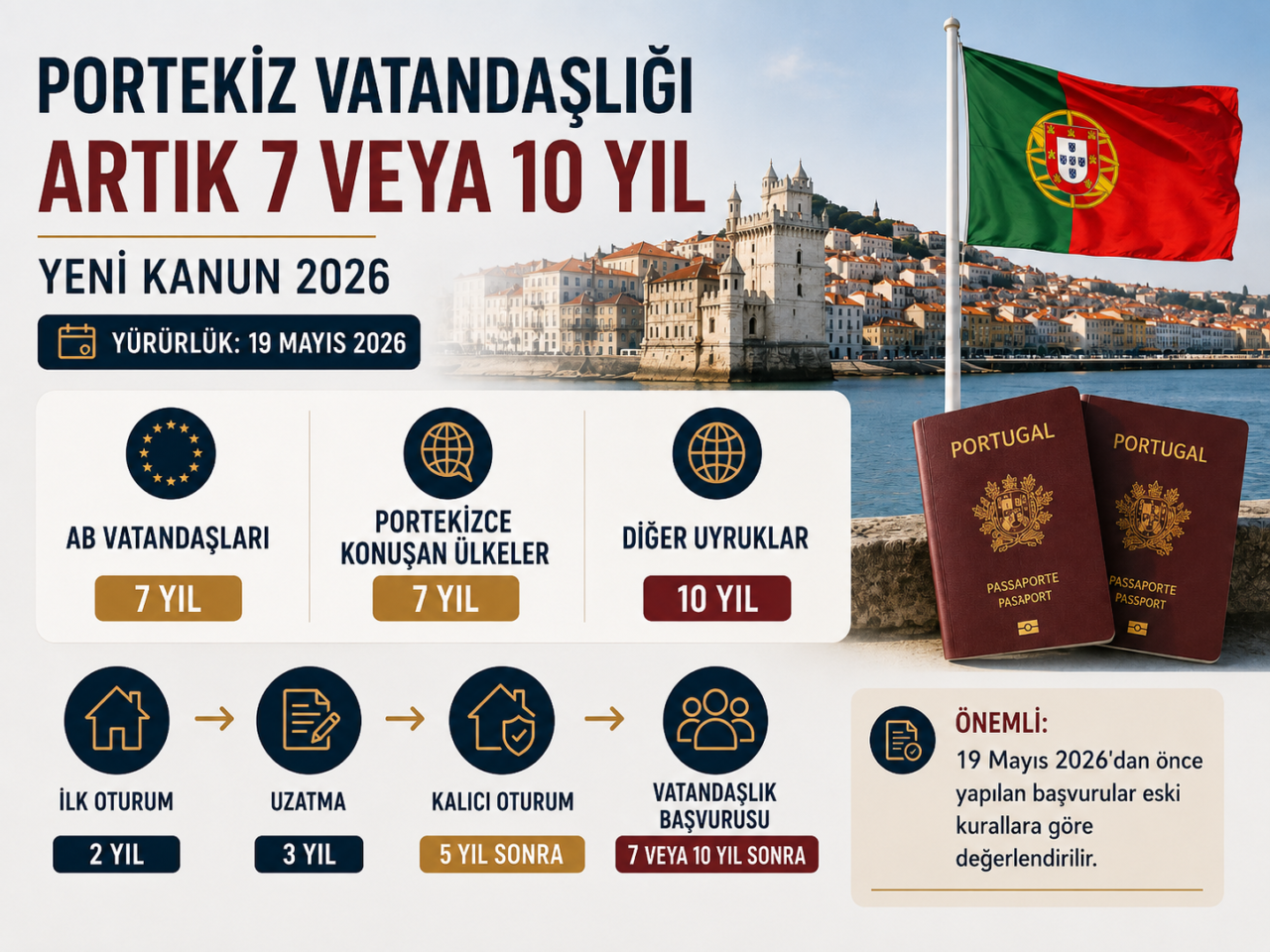
Is Portuguese Citizenship No Longer Available After 5 Years?
Yes. In 2026, Portugal introduced a major change to its nationality law. Under the previous system, foreign residents could generally apply for Portuguese citizenship after 5 years of legal residence. Under the new rules, the timeline is no longer the same for all applicants.
According to the new framework, EU citizens and citizens of Portuguese-speaking countries may apply after 7 years, while most other foreign nationals must now complete 10 years of legal residence before applying for Portuguese citizenship. This reform was introduced by Lei Orgânica n.º 1/2026, published on 18 May 2026. (diariodarepublica.pt)
When Did the New Law Enter into Force?
The new Portuguese nationality rules entered into force in May 2026. The law was published in the official gazette, Diário da República, on 18 May 2026, and the new rules started to apply on 19 May 2026. The Portuguese justice portal also confirms that the new nationality law entered into force on 19 May 2026. (diariodarepublica.pt)
Who Is Subject to the 10-Year Rule?
Under the new rules, the general naturalisation timeline is:
EU citizens: 7 years
Citizens of Portuguese-speaking countries: 7 years
Other foreign nationals: 10 years
This means that Turkish, Russian, Chinese, Indian, Middle Eastern and most non-EU/non-CPLP nationals are now generally subject to the 10-year legal residence requirement.
Are Old Applications Affected?
The key issue is whether the citizenship application was already filed before the new law entered into force. Simply holding a residence permit in Portugal, or even completing 5 years of residence, does not automatically protect an applicant under the old rule.
If a citizenship application was filed before 19 May 2026 and was already pending, it should generally continue under the previous legal framework. However, if a person had completed 5 years of residence but had not filed the citizenship application before 19 May 2026, they may be subject to the new 7 or 10-year requirement. (diariodarepublica.pt)
What Residence Status Should Applicants Move to After 5 Years?
Because Portuguese citizenship now requires 10 years for many applicants, the most practical step after 5 years is usually to apply for permanent residence, known in Portuguese as Autorização de Residência Permanente.
The standard residence timeline is generally:
First temporary residence permit: 2年
Renewal: 3年
Total: 5 years
After 5 years: Permanent residence application
After 10 years: Citizenship application
This is now especially important for D7, D8, work residence, family reunification and investment-based residence permit holders. Permanent residence usually requires at least 5 years of temporary residence, sufficient means of subsistence, accommodation, basic Portuguese language knowledge and a clean criminal record. (lexology.com)
How Long Is Permanent Residence Granted For?
Permanent residence in Portugal gives a more stable long-term status. The status itself is generally considered permanent, but the residence card must be renewed periodically. In practice, the permanent residence card is usually renewed every 5 years. (consiliojus.com)
For applicants who can no longer apply for citizenship after 5 years, permanent residence becomes the most important intermediate status before citizenship.
What Does This Mean for D7, D8 and Golden Visa Holders?
The new law affects D7 passive income visa holders, D8 digital nomad visa holders, work permit holders, family reunification residents and investment-based residence permit holders. The type of residence permit does not necessarily block the route to citizenship, but the decisive factor is now the number of years of legal residence and compliance with the new nationality requirements.
Holding a Golden Visa or another residence permit does not automatically guarantee citizenship after 5 years under the 2026 rules. Applicants must now plan according to the new 7 or 10-year timeline.
结论
As of 2026, Portuguese citizenship is no longer generally available after 5 years for many foreign nationals. EU and Portuguese-speaking country citizens are subject to a 7-year residence requirement, while most other foreign nationals are subject to a 10-year requirement.
The most important point is this: applications filed before 19 May 2026 may still benefit from the previous rules. However, applicants who only held residence permits but had not filed their citizenship application before that date may fall under the new timeline.
For many residents, the best strategy after 5 years is now to apply for permanent residence and plan the citizenship application once the 7 or 10-year period is completed.
